My Wife Says She Doesn't Love Me Anymore – What's Actually Happening
If your wife has told you she doesn't love you anymore, here's what that phrase almost certainly means — and what it almost certainly doesn't.
Why this hits so hard
The phrase "I don't love you anymore" does something specific to the person who hears it. It feels final. It feels like a fact. It feels like a door closing permanently on something you can't get back.
That reaction makes sense. The words sound definitive. They come from someone who knows you better than almost anyone — so they carry weight that almost nothing else does.
But the reaction those words create in you — the panic, the desperation, the urgency to fix it immediately — is exactly what makes the situation worse. Before you act, you need to understand what those words actually mean.
This is why the phrase lands so hard — and why the instinct to act immediately is exactly wrong.
What she's actually saying
In most cases, "I don't love you anymore" is not a factual statement. It is a description of how someone feels in a state of deep emotional disconnection.
When a partner who has been with you for years says this, they are almost always describing numbness — not the permanent absence of love that was once real. Emotional detachment does not arrive all at once. It builds over months or years of feeling unheard, unseen, or disconnected. By the time someone says those words, they have usually been withdrawing for a long time.
The phrase is the visible surface of something that has been developing quietly underneath. It is not when the problem started. It is when it became impossible to hide.
What does "I don't love you anymore" usually mean?
In long-term relationships, this phrase almost always describes emotional shutdown rather than a permanent loss of feeling. It means she is numb and disconnected — and has been for a long time. It is a description of her current emotional state, not a verdict on whether the relationship can recover.
Q: Does "I don't love you anymore" mean the relationship is over?
Not automatically. It means she's describing a state of emotional shutdown — a process, not a permanent verdict. Understanding the difference is the first step to responding to the actual problem rather than to the surface phrase.
Shutdown vs actually being done
There is a meaningful difference between a partner who is in emotional shutdown and one who is genuinely finished.
A partner who has fully processed the relationship and moved on is typically calm, clear, and consistent. They know what they want. They are not reactive or defensive. They are simply done.
A partner in emotional shutdown looks different. She is inconsistent. Reactive. She responds when you engage — even if the response is anger or withdrawal. She cannot clearly explain what she wants or what would change things. She is still present, still in the house — but emotionally unreachable.
Signs it's likely shutdown rather than a final decision
- She hasn't left and hasn't pushed you to leave
- She reacts when you engage — even if the reaction is negative or defensive
- She can't clearly say what she wants or what would change things
- There were specific patterns that led here — not a slow, general drift
- There are occasional moments of warmth or connection between the coldness
Q: Can feelings come back after she says she doesn't love me anymore?
If what she's describing is emotional shutdown rather than a final decision, then yes — the numbness is not permanent. But feelings don't return through pressure or grand gestures. They return when the conditions that created the shutdown change. That requires understanding what those conditions actually were.
Q: Is this permanent?
No — in most shutdown cases, it isn't permanent. But it feels permanent because the person has lost access to their feelings, not because the feelings are gone. That's why everything you try makes it worse — you're responding to what it looks like, not what it is.
Why everything you try makes it worse
The instinct when your wife says she doesn't love you is to act immediately: apologise, explain, push for conversation, make a gesture, give her space. These instincts are understandable. In this situation, they almost all backfire for the same reason.
Pressure — even well-intentioned pressure — accelerates withdrawal in someone who is shut down. They are in a protective state. When you push, it confirms that the relationship is emotionally demanding and unsafe rather than calm and available.
Apologising without understanding what you're apologising for reads as hollow. Pushing for conversation adds pressure to an already overloaded system. Grand gestures feel manipulative to someone who can't access the feelings you're appealing to.
The problem is not your effort. The problem is that you are applying tactics to a situation you haven't fully understood yet. Understanding how that emotional distance built in the first place is what changes the approach.
If everything you're doing is making this worse, it's not because you're doing the wrong things. It's because you're applying normal relationship logic to a shutdown pattern. That's why none of it works.
Q: Why does giving her more attention make things worse?
Because emotional shutdown is a form of self-protection. More attention, more effort, more affection all register as pressure — not love. They confirm her instinct to pull back, not to open up. In shutdown situations, more effort almost always produces more withdrawal. This is counterintuitive but consistent.
What actually helps
Understanding the specific dynamics that created the shutdown — not just what triggered the phrase. Responding to the actual pattern rather than to the surface behaviour. Changing the conditions that caused this, not just the intensity of your approach.
The path forward does not look like any advice you have probably been given. It requires understanding what emotional shutdown actually is, what specifically created it in your relationship, and what kinds of changes address the underlying conditions — not just the visible symptoms.
If this is what you're dealing with, the next step isn't trying harder — it's understanding the pattern properly.
If nothing you've tried has worked, this explains why
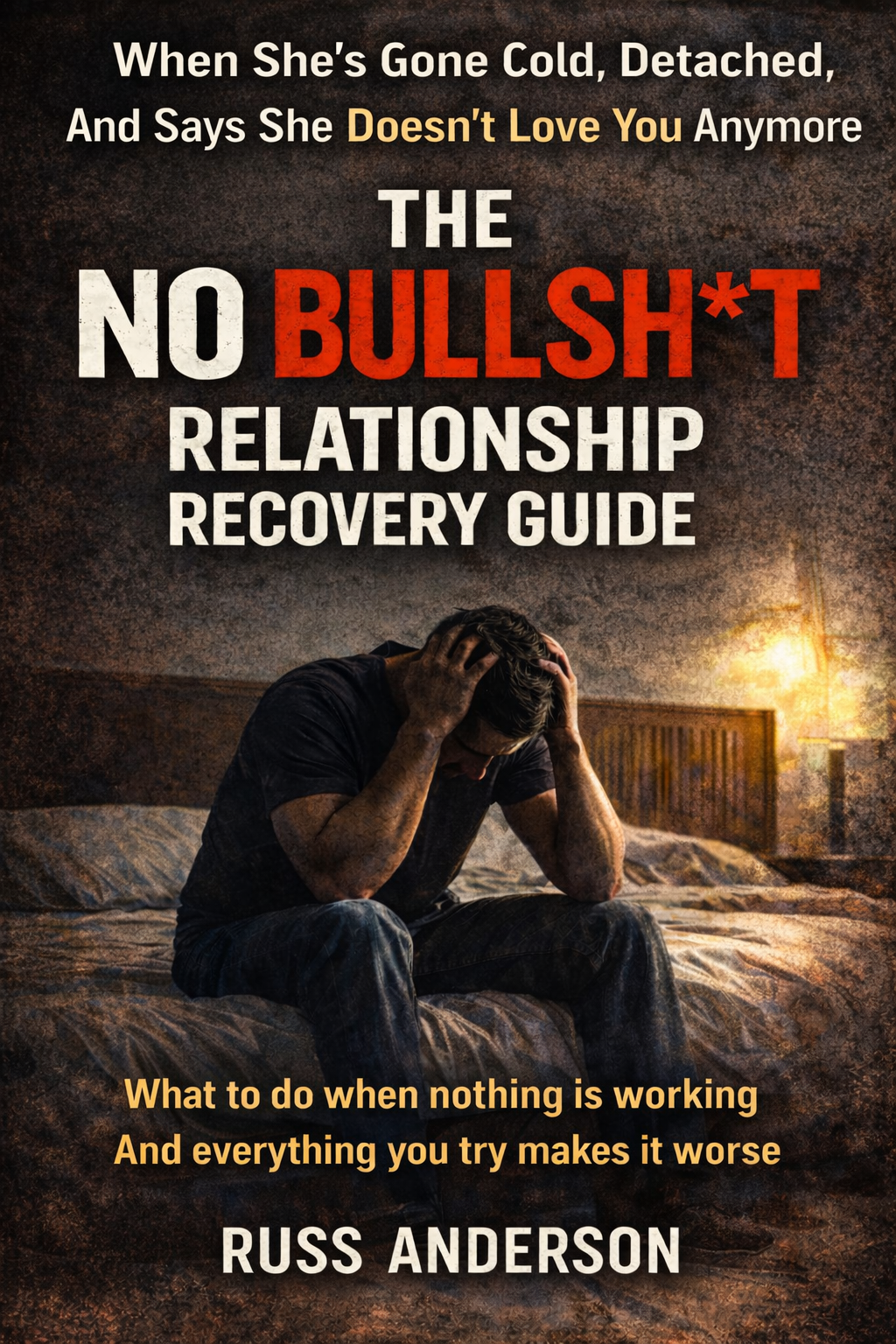
The No Bullsh*t Relationship Recovery Guide — When She's Gone Cold, Detached, and Says She Doesn't Love You Anymore
Written from inside this situation — not from theory or second-hand observation. The same pattern, mapped in real time as it happened. Direct, honest, no therapy language.
Free AI Companion Tool
Get specific answers based on your situation with the Relationship Oracle GPT — not generic advice that could apply to anyone.
Relationship Oracle GPT →